
This manual guides users through the Polaroid Snap Touch’s features, offering insights from resources like the Internet Archive.
It details operation, printing, and troubleshooting for optimal instant photo enjoyment.
What is the Polaroid Snap?
The Polaroid Snap is a compact digital camera designed for instant photo printing. Unlike traditional Polaroid cameras utilizing film, the Snap employs ZINK (Zero Ink) technology. This innovative process means no ink cartridges are needed; the ZINK paper itself contains the dye for vibrant, full-color prints.
As highlighted by resources like Argos product descriptions and the Internet Archive, the Snap series offers a convenient way to capture and share memories immediately. It bridges the gap between digital convenience and the nostalgic appeal of instant photography, making it a popular choice for casual users.
Key Features of the Polaroid Snap Touch
The Polaroid Snap Touch elevates the instant photography experience with several key features. A prominent touchscreen display facilitates easy navigation and image review, distinguishing it from simpler Snap models.
Connectivity, notably Bluetooth, allows for smartphone integration and remote control capabilities, as noted in recent product reviews. The camera supports ZINK paper printing, delivering instant, sticker-backed photos. Furthermore, it boasts various shooting modes and editing tools, enhancing creative control, as detailed in available user manuals and online resources.
Getting Started with Your Polaroid Snap
Begin your instant photography journey! This section covers unboxing, charging, and ZINK paper insertion – essential first steps for enjoying your new Polaroid Snap Touch.
Unboxing and Components
Carefully unpack your Polaroid Snap Touch! Inside the box, you should find the camera itself, a ZINK Zero Ink paper pack (typically 20 sheets), a Micro-USB charging cable, and this user manual. Verify all components are present and undamaged.
Inspect the camera body for any shipping damage. The ZINK paper pack is crucial for instant printing, so ensure it’s sealed. The Micro-USB cable is used for charging the camera’s internal battery. Retain the packaging for potential future use or warranty claims. Familiarize yourself with each component before proceeding.
Charging the Camera
Before first use, fully charge your Polaroid Snap Touch. Connect the included Micro-USB cable to the camera’s charging port and a USB power adapter (not included) or a computer.
The LED indicator will illuminate, typically red while charging. Charging time is approximately 2-3 hours for a full charge. The LED will change color (often to green) when charging is complete. Disconnect the cable once fully charged to preserve battery life. Avoid using damaged USB cables or power adapters.
Inserting the ZINK Paper
The Polaroid Snap utilizes ZINK (Zero Ink) paper for printing. To load, locate the paper compartment, usually on the side or bottom of the camera. Open the compartment and insert a stack of ZINK paper, ensuring the blue side faces down.
The camera automatically detects the paper type and quantity. Do not overfill the compartment. Properly loaded paper is crucial for successful printing; misaligned or incorrect paper can cause errors.
Understanding the Camera Interface
The Polaroid Snap features intuitive controls, including a power button and modes. The Snap Touch model boasts a touchscreen for navigation and settings adjustments;
Power Button and Modes
The power button on your Polaroid Snap initiates camera operation and access to various shooting modes. A short press typically powers the camera on or off, while a long press may activate specific functions.
Shooting modes allow for creative control, potentially including options like standard photo capture, black and white, or sepia. The Snap Touch model’s touchscreen interface simplifies mode selection.
Understanding these modes enhances your photographic experience, enabling you to capture images tailored to your artistic vision and desired aesthetic. Explore each mode to unlock the full potential of your Polaroid Snap.
Touchscreen Navigation (Snap Touch Model)
The Polaroid Snap Touch boasts an intuitive touchscreen interface for seamless control. Swipe gestures navigate menus, adjust settings, and preview captured images. Tapping icons selects shooting modes, activates the self-timer, or initiates printing.
The touchscreen allows for easy image review, zooming, and deletion. Familiarize yourself with the icons and their functions for efficient operation.
This responsive interface enhances the user experience, providing direct and convenient access to all camera features, streamlining your creative process.
LED Indicators
The Polaroid Snap utilizes LED indicators to communicate camera status. A solid green light signifies readiness for capture, while a blinking green indicates printing is in progress. Red LEDs signal errors, such as low ZINK paper or a camera malfunction.
Different blinking patterns convey specific issues, prompting troubleshooting.
Understanding these visual cues ensures efficient operation and quick problem resolution. Refer to the full manual for a comprehensive decoding of each LED signal, maximizing your shooting experience.

Taking Photos and Videos
Capture life’s moments instantly! The Polaroid Snap allows for basic photo capture and video recording, offering diverse shooting modes for creative expression and enjoyment.
Basic Photo Capture
To take a standard photograph with your Polaroid Snap, ensure the camera is powered on and in Photo mode. Frame your subject using the viewfinder or touchscreen (Snap Touch).
Press the shutter button firmly; the camera will quickly capture the image and initiate the printing process if ZINK paper is loaded.
Hold the camera steady during capture to avoid blurry results.
Experiment with different lighting conditions and compositions to enhance your photos.
Remember to review the printed image for satisfaction and adjust settings as needed for future shots.
Using Different Shooting Modes
The Polaroid Snap offers various shooting modes to enhance your creativity. Explore options like Black & White for classic monochrome images, or Sepia for a vintage aesthetic.
The Self-Timer mode allows for self-portraits or group photos with a delay.
Some models feature a Burst mode for capturing a rapid sequence of images, ideal for action shots.
Experiment with these modes to achieve diverse photographic styles and personalize your instant prints. Refer to the camera’s interface for mode selection and adjustments.
Recording Videos
The Polaroid Snap Touch allows for short video recording, adding dynamic content to your instant photography experience. Access the video mode through the camera’s interface, typically indicated by a video camera icon.
Record videos by pressing the shutter button; a timer will display the recording duration.
Keep in mind that video length is limited by available storage and ZINK paper capacity.
Review recorded videos on the camera’s screen before printing selected frames as still images.
Printing Your Photos
Initiate prints directly from the camera after capturing images, utilizing compatible ZINK paper for instant, full-color photos. Troubleshooting guides address common printing errors.
Initiating the Printing Process
After capturing your desired photo, the printing process is remarkably straightforward. On the Polaroid Snap Touch, a dedicated button or touchscreen option initiates immediate printing. The camera communicates with the ZINK paper to produce a physical copy within moments.
Ensure the ZINK paper is correctly loaded, as detailed in the ‘Inserting the ZINK Paper’ section. The camera displays a progress indicator during printing, and the photo ejects automatically once complete.
Refer to troubleshooting if printing fails, checking paper levels and camera connectivity.
ZINK Paper Compatibility
The Polaroid Snap series relies exclusively on ZINK (Zero Ink) paper for printing. This innovative paper contains embedded dye crystals that activate upon heating, eliminating the need for traditional ink cartridges.
Only use genuine Polaroid ZINK paper to guarantee optimal print quality and prevent camera damage.
Non-Polaroid ZINK paper may cause malfunctions or produce unsatisfactory results. Ensure the paper pack is correctly inserted, with the blue backing facing upwards, for successful printing.
Troubleshooting Printing Issues
If your Polaroid Snap isn’t printing, first verify ZINK paper is loaded correctly—blue side up. Check for error messages on the display (Snap Touch) or LED indicators. Ensure the paper isn’t damp or expired.
If issues persist, try restarting the camera.
A “Paper Jam” error may require carefully removing the paper pack and reinserting it.
Avoid using non-Polaroid ZINK paper, as it can cause printing failures and potential damage.

Advanced Features and Settings
Explore the Polaroid Snap’s self-timer, flash controls, and image quality options for customized photos. These settings enhance creativity and adapt to diverse shooting conditions.
Self-Timer Function
The Polaroid Snap features a convenient self-timer, perfect for group photos or capturing yourself in the moment. To activate, navigate to the camera’s settings menu – typically accessible via the touchscreen on the Snap Touch model.
Select the self-timer option and choose your desired delay, often offering 2 or 10-second intervals. Once activated, a countdown will appear on the screen, giving you time to pose.
Press the shutter button, and the camera will automatically take a photo after the selected delay. This function is ideal for ensuring everyone is included in the shot or for achieving creative self-portraits.
Flash Settings
The Polaroid Snap offers adjustable flash settings to optimize your photos in various lighting conditions. Access these settings through the camera’s menu, usually found on the touchscreen interface of the Snap Touch version.
You’ll typically find options for Auto, On, and Off. ‘Auto’ allows the camera to determine when flash is needed, while ‘On’ forces the flash to fire with every shot.
‘Off’ disables the flash entirely, useful in well-lit environments or when you want to avoid harsh lighting. Experiment with these settings to achieve the desired look for your instant photos.
Image Quality Settings
The Polaroid Snap cameras generally offer limited, but useful, image quality settings. While not as extensive as a DSLR, you can often adjust the resolution for your photos. Higher resolutions capture more detail, resulting in larger file sizes and potentially better print quality.
Explore the camera’s menu – particularly on the Snap Touch model – to find these options.
Consider the intended use of your photos; lower resolutions are suitable for sharing online, while higher resolutions are ideal for printing larger formats. Experiment to find the balance between quality and storage space.
Maintenance and Care
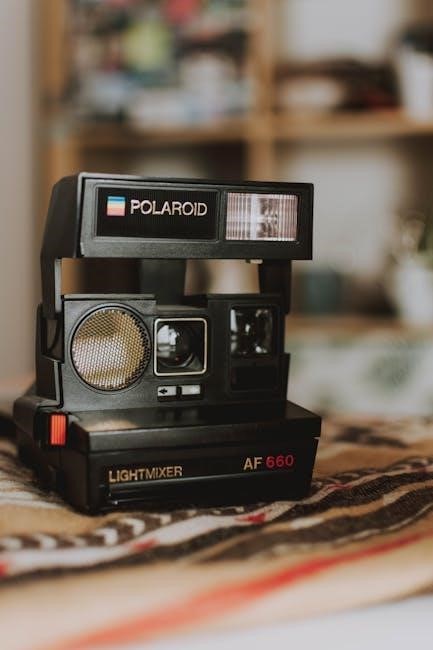
Proper cleaning, storage of the camera and ZINK paper are crucial for longevity. Gently wipe the camera and store both in cool, dry environments.
Cleaning the Camera
To maintain your Polaroid Snap’s pristine condition, regular cleaning is essential. Always power off the camera before commencing any cleaning procedures. Use a soft, dry microfiber cloth to gently wipe the exterior surfaces, removing dust and fingerprints.
Avoid using abrasive cleaners, solvents, or excessive moisture, as these can damage the camera’s finish or internal components. For stubborn marks, lightly dampen the cloth with water, ensuring it’s not dripping wet.
Pay particular attention to the lens, using a lens cleaning cloth to remove smudges without scratching. Do not disassemble the camera for cleaning purposes; this could void the warranty and potentially cause damage.
Storing Your Polaroid Snap
Proper storage extends the life of your Polaroid Snap camera. When not in use, store the camera in a cool, dry place, away from direct sunlight and extreme temperatures. Avoid storing it in humid environments, which can cause corrosion or damage to internal components.
A protective case or bag is recommended to shield the camera from dust and accidental impacts.
Remove the ZINK paper before long-term storage to prevent potential issues. Ensure the battery is partially charged before storing to maintain its health and prevent complete discharge.
ZINK Paper Storage
Maintaining ZINK paper quality is crucial for vibrant prints. Store unused ZINK paper in a cool, dry, and dark location, shielded from direct sunlight and humidity. Exposure to these elements can degrade the paper’s embedded dye crystals, resulting in faded or discolored prints.
Keep the paper sealed in its original packaging until ready for use.
Avoid bending or creasing the paper, as this can affect the printing process. Proper storage ensures optimal performance and longevity of your Polaroid Snap prints.

Troubleshooting Common Problems
This section addresses frequent issues like camera power failures, printing errors, and connectivity problems (Snap Touch model), offering solutions for a smooth experience.

Camera Not Turning On
If your Polaroid Snap fails to power on, first ensure it’s adequately charged. Connect the camera to a power source using the provided USB cable and allow sufficient charging time.
Verify the power adapter and cable are functioning correctly by testing with another device.
If charging doesn’t resolve the issue, attempt a reset by briefly pressing and releasing the power button multiple times.
Check for any physical obstructions around the power button.
If the problem persists, consult the full user manual available on resources like the Internet Archive for further diagnostic steps and potential solutions;
Printing Errors
Encountering printing issues with your Polaroid Snap? First, confirm ZINK paper is correctly loaded, ensuring the blue protective strip faces down.
Verify paper compatibility – only ZINK paper is supported.
If prints are blank or distorted, check the ZINK paper supply and replace if low or damaged.
Ensure the camera lens is clean, as smudges can affect print quality.
Refer to the comprehensive user manual, accessible via resources like the Internet Archive, for detailed troubleshooting steps and potential error code explanations.
Connectivity Issues (Snap Touch)
Experiencing Bluetooth connection problems with your Polaroid Snap Touch? Ensure Bluetooth is enabled on both the camera and your smartphone or tablet.
Verify the camera is in pairing mode, as detailed in the user manual available on platforms like the Internet Archive.
Check for software updates for both the camera and the Polaroid app.
Restarting both devices can often resolve connection glitches. Confirm no other devices are interfering with the Bluetooth signal, and consult the manual for specific troubleshooting steps.