
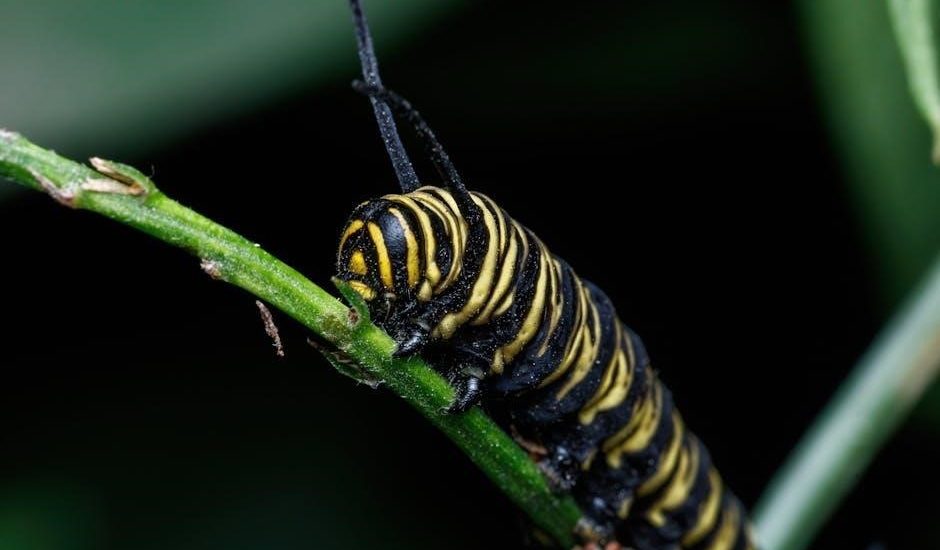
Safer Caterpillar Killer is an OMRI-certified‚ natural‚ and effective biological insecticide concentrate. It controls leaf-eating caterpillars and worms on vegetables‚ fruits‚ and ornamentals‚ without harming beneficial insects. Gentle on the environment‚ proper mixing ensures optimal‚ safe results for your plants.
Product Description and Benefits
Safer Caterpillar Killer is a highly effective‚ OMRI-certified biological insecticide concentrate‚ specifically formulated with a naturally occurring bacterium (Bt) to combat various leaf-eating caterpillars and worms. This powerful yet gentle solution is designed for safe application across a wide array of plants‚ including fruits‚ vegetables‚ trees‚ shrubs‚ and ornamental plants. A key benefit of this product is its selective action: it targets and kills only the caterpillar and worm stages of insects that consume treated foliage. This ensures precise pest management without broader impact.
Crucially‚ Safer Caterpillar Killer has no detrimental effects on beneficial insects such as honeybees and ladybugs‚ nor does it harm birds or earthworms when used as directed. This ensures the preservation of your garden’s ecological balance. Upon ingesting foliage treated with the concentrate‚ caterpillars immediately cease feeding‚ preventing further damage to your plants‚ and typically die within a few days. Furthermore‚ it is deemed safe for use on edible plants right up to the day of harvest‚ offering a natural and reliable method for pest control without compromising crop safety or environmental health. Its concentrated form allows for efficient and economical use in your garden.
How Safer Caterpillar Killer Works
Safer Caterpillar Killer operates as a targeted biological insecticide‚ leveraging the power of Bacillus thuringiensis var. Kurstaki (Bt)‚ a naturally occurring bacterium. When applied to plant foliage‚ the concentrate coats the leaves‚ creating a treated surface. For the product to be effective‚ caterpillars and other leaf-eating worms must ingest these treated leaves. Once consumed‚ the Bt within the caterpillar killer releases specific toxins in the caterpillar’s alkaline digestive system.
These toxins disrupt the gut lining of the pest‚ causing them to stop feeding almost immediately. This cessation of feeding is crucial‚ as it prevents further damage to your plants. While the caterpillars stop eating right away‚ they may not show outward signs of distress or death for several days. The internal disruption eventually leads to paralysis of the digestive system and‚ consequently‚ the death of the caterpillar within a few days. This mechanism ensures that the product is highly specific to the target pests‚ as it requires ingestion and the unique digestive physiology of caterpillars for activation. Best results are achieved when applied to smaller‚ actively feeding larvae.
Key Mixing Instructions
Proper mixing is essential for the safe and effective application of Safer Caterpillar Killer. Accurate concentrate ratios ensure optimal pest control‚ protecting your plants while conserving resources. Always follow specific instructions carefully to achieve the best results.
Standard Concentrate Ratios
The standard concentrate ratios for Safer Caterpillar Killer are crucial for effective pest management. For general application‚ a common guideline suggests mixing 1 to 2 teaspoons of the concentrate per gallon of water. This range is suitable for controlling most typical caterpillar and worm infestations on a variety of plants‚ including vegetables‚ fruits‚ trees‚ shrubs‚ and ornamentals. Another widely recommended ratio is 1 tablespoon of concentrate per gallon of water. This is equivalent to using 1.5 fluid ounces of product for every 3 gallons of water‚ providing a consistent dilution for broader coverage‚ typically for an area of 1000 square feet when applied via a hand sprayer. When dealing with metric measurements‚ the label often specifies adding 30 milliliters of concentrate to 10 liters of water. Regardless of the measurement system‚ adherence to these standard ratios ensures that the active ingredient‚ Bacillus thuringiensis (Bt)‚ is sufficiently concentrated to be ingested by the caterpillars‚ leading to their cessation of feeding and subsequent demise. Always use accurate measuring tools to maintain the integrity of the solution and achieve optimal results. These standard dilutions form the foundation for successful‚ environmentally conscious pest control.
Alternative Ratios and Conversions
Beyond the standard recommendations‚ understanding alternative measurements and conversions for Safer Caterpillar Killer offers crucial flexibility for varying application needs. A common alternative ratio suggested is 1 tablespoon of concentrate per gallon of water‚ which simplifies preparation for many gardeners using standard kitchen measuring tools. This ratio conveniently converts to approximately 1.5 fluid ounces of concentrate for every 3 gallons of water‚ proving useful when preparing larger batches intended to cover an area of 1000 square feet. For metric users‚ the product label often specifies mixing 30 milliliters of concentrate into 10 liters of water. This metric ratio scales down easily; for instance‚ if only 1 liter of solution is required‚ precisely 3 milliliters of concentrate should be added. Such precise conversions are essential to avoid overuse or under-dilution‚ ensuring optimal product efficacy while minimizing waste. This is particularly important given the mixed solution’s limited shelf life. These varied ratios and accurate conversions empower users to adapt to different sprayer sizes and treat diverse areas effectively.
Adjusting for Severe Infestations
For severe caterpillar infestations‚ adjusting the mixing ratio and application frequency of Safer Caterpillar Killer is critical to regain control. While standard instructions often suggest 1 to 2 teaspoons of concentrate per gallon of water‚ heavy outbreaks or the presence of larger‚ more resilient larvae‚ such as Gypsy Moths or Budworms‚ may necessitate a stronger solution. In such cases‚ increasing the concentration up to 4 teaspoons per gallon of water is recommended to enhance efficacy. This intensified mix ensures a more potent dose of the active ingredient‚ Bacillus thuringiensis (Bt)‚ which is vital when pest populations are high.
Beyond adjusting the ratio‚ modifying the reapplication schedule is equally important. Instead of the typical five to seven-day interval‚ applying the solution more frequently can be necessary to combat rapidly multiplying or widespread infestations. Ensure thorough coverage of both the top and bottom surfaces of foliage‚ as caterpillars must ingest the treated plant material for the product to be effective. Consistent application‚ particularly when larvae are actively feeding‚ will help manage the infestation and protect your plants from extensive damage more efficiently.
Small Batch Mixing Calculations
Preparing small batches of Safer Caterpillar Killer is highly practical‚ especially considering the mixed solution’s limited shelf life‚ typically around 24 hours. This approach significantly reduces waste and ensures product efficacy for targeted applications. Accurate scaling down of standard concentrate ratios is essential. For example‚ if the general recommendation is 1 tablespoon of concentrate per gallon of water‚ and you require only a half-gallon‚ you would precisely measure 0.5 tablespoons (or 1.5 teaspoons) of concentrate to mix with that half-gallon of water. Another common instruction‚ 30 ml of concentrate for 10 liters of water‚ can be scaled to 3 ml for a 1-liter batch‚ demonstrating direct proportionality. When using the guideline of 1 to 2 teaspoons per gallon‚ a smaller volume like a quart (which is one-fourth of a gallon) would necessitate 1/4 to 1/2 teaspoon of concentrate. Utilizing dedicated measuring spoons‚ syringes‚ or even a kitchen scale for fluid ounces or milliliters ensures the precision required for these smaller volumes. Always shake or stir the original concentrate thoroughly before measuring. By carefully calculating and mixing only the necessary amount‚ gardeners can effectively manage pests without over-preparing‚ thus optimizing resource use and minimizing unnecessary disposal.

Step-by-Step Preparation
Begin by thoroughly shaking the concentrate. Partially fill your sprayer with water‚ then carefully add the measured concentrate. Mix thoroughly until fully dispersed. Top up with remaining water‚ ensuring consistent agitation. This prepares your solution for effective application.
Pre-Mixing Essentials
Before initiating the preparation of your Safer Caterpillar Killer solution‚ several crucial steps ensure optimal efficacy and safety. First‚ it is paramount to thoroughly shake or stir the concentrated product. This action ensures that the active ingredients are evenly distributed throughout the solution‚ preventing inconsistencies in potency when diluted. Next‚ gather all necessary equipment‚ including your chosen sprayer‚ accurate measuring spoons or cups‚ and a clean water source. Consider the volume of solution you require‚ as the mixed product has a limited shelf life‚ typically around 24 hours. This foresight prevents waste and ensures you prepare only what is immediately needed. Familiarize yourself with the recommended mixing ratios from the product label‚ which generally suggest 1 to 2 teaspoons per gallon of water‚ or 1.5 fluid ounces per 3 gallons‚ simplifying to 1 tablespoon per gallon for convenience. Having a clear understanding of these ratios is vital for adjusting to varying infestation levels or plant types. Finally‚ partially fill your sprayer with the appropriate amount of clean water before introducing the concentrate. This foundational step prepares the vessel for the subsequent addition and ensures proper dissolution.
Adding Concentrate to Sprayer
Once the sprayer is partially filled with the necessary amount of water‚ as established during the pre-mixing essentials‚ the crucial next step is accurately adding the Safer Caterpillar Killer concentrate. Begin by ensuring the concentrate itself has been thoroughly shaken or stirred‚ guaranteeing a uniform distribution of its active ingredients. Carefully measure the precise quantity of concentrate based on your specific needs and the severity of the pest infestation. Standard guidelines suggest mixing 1 to 2 teaspoons per gallon of water. For more severe issues‚ such as high populations or larger larvae like Gypsy Moths‚ you may increase this ratio up to 4 teaspoons per gallon‚ following product recommendations. For larger application volumes‚ a convenient ratio is 1.5 fluid ounces per 3 gallons of water‚ or simply 1 tablespoon per gallon. Gently pour the accurately measured concentrate directly into the partially filled sprayer. This careful transfer prevents any product loss and maintains the intended concentration of your solution. Following this‚ an initial thorough mixing is essential before adding the remaining water‚ ensuring the active ingredient is evenly dispersed throughout the entire solution.
Thorough Mixing Procedure
After the concentrate has been carefully added to the partially filled sprayer‚ a thorough mixing procedure is paramount to ensure the effectiveness of Safer Caterpillar Killer. Initially‚ gently swirl or agitate the sprayer contents. This preliminary mixing helps to begin dispersing the concentrate evenly within the initial volume of water‚ preventing it from settling at the bottom. Once this initial blend is achieved‚ proceed to add the remaining amount of water to the sprayer until it reaches the desired total volume for your application. After topping up with water‚ a more vigorous and sustained mixing is required. Close the sprayer securely and shake it thoroughly for at least 30-60 seconds. Alternatively‚ if your sprayer allows‚ use a stirring rod or agitator to ensure the solution is completely homogenous; It is crucial that no streaks or pockets of unmixed concentrate remain. Throughout the actual spraying process‚ especially for larger applications‚ it is recommended to agitate the mixture periodically. This regular agitation prevents the active bacterial spores from settling out of suspension‚ maintaining a consistent potency of the treatment as you apply it to foliage. A well-mixed solution guarantees that every treated leaf receives the proper dose for effective caterpillar control.
Optimal Application Guidelines
For effective control‚ apply Safer Caterpillar Killer following precise guidelines. Optimal application ensures caterpillars ingest the treated foliage‚ leading to immediate cessation of feeding. Focus on thorough coverage and adherence to environmental conditions for best results against active infestations‚ safeguarding your plants effectively.
Timing and Environmental Conditions
Optimal timing and environmental conditions are crucial for Safer Caterpillar Killer’s effectiveness. Apply the product late in the afternoon or on cloudy days for best results. This specific timing is vital because the active ingredient‚ Bacillus thuringiensis (Bt)‚ breaks down when exposed to direct sunlight‚ reducing its potency. Applying during cooler‚ less sunny periods maximizes the insecticide’s active duration on foliage‚ significantly increasing the chance of caterpillars ingesting it.
Begin treatment at the first sign of caterpillar or worm activity. Early intervention is key‚ as the product works best when larvae are small and actively feeding on treated leaves. Monitor plants regularly for new infestations. Reapply after heavy rains‚ as precipitation can wash away the product. Repeat applications every five to seven days while pests are active. For severe infestations‚ more frequent applications may be needed. Importantly‚ Safer Caterpillar Killer is safe for use on edible plants‚ allowing application up to and including the day of harvest‚ ensuring continuous protection for your crops.
Foliage Coverage for Effectiveness
Achieving thorough foliage coverage is paramount for the effectiveness of Safer Caterpillar Killer. This biological insecticide works by being ingested by caterpillars and worms; therefore‚ every surface where these pests might feed must be adequately treated. It is crucial to spray all leaf surfaces‚ both the tops and bottoms‚ to ensure complete contact with the active ingredient. Many caterpillars hide on the undersides of leaves‚ making comprehensive coverage essential for them to encounter and consume the treated plant material.
When applying‚ aim for a fine‚ even mist that coats the foliage without excessive runoff. Agitate the sprayer regularly during application to maintain a consistent mixture and ensure even distribution of the concentrate. Complete coverage ensures that the worms and caterpillars actively feeding on your plants will ingest the bacterium‚ causing them to stop feeding almost immediately. While they may appear unaffected for several days‚ the cessation of feeding prevents further plant damage. Best results are obtained when small‚ actively feeding worms are treated‚ as they are more likely to consume the freshly sprayed foliage.
Reapplication Schedule
Establishing an effective reapplication schedule is vital for continuous control of caterpillars and other leaf-eating worms using Safer Caterpillar Killer. Begin applying the product as soon as worms or caterpillars are first noticed on your plants. Initial application targets the active feeding pests and helps mitigate immediate damage. For ongoing control and to manage successive generations or new infestations‚ repeat treatments at regular intervals.
The recommended reapplication frequency is every five to seven days while the caterpillars remain active. This ensures that newly hatched larvae or those that may have been missed during the initial application are exposed to the treated foliage. In instances of heavy infestations‚ it may be necessary to apply the product more frequently to achieve optimal control. Always reapply after heavy rains‚ as precipitation can wash away the applied solution‚ reducing its effectiveness. Furthermore‚ Safer Caterpillar Killer can be safely reapplied as necessary‚ even up to the day of harvest for edible plants‚ allowing for continuous protection without concerns about harvest restrictions.
Post-Mixing and Storage
Mixed Safer Caterpillar Killer solution has a limited shelf life. It is crucial to use the prepared spray mixture within 18 to 24 hours for optimal effectiveness. Apply all mixed solution promptly to ensure potency against caterpillars.
Mixed Solution Shelf Life
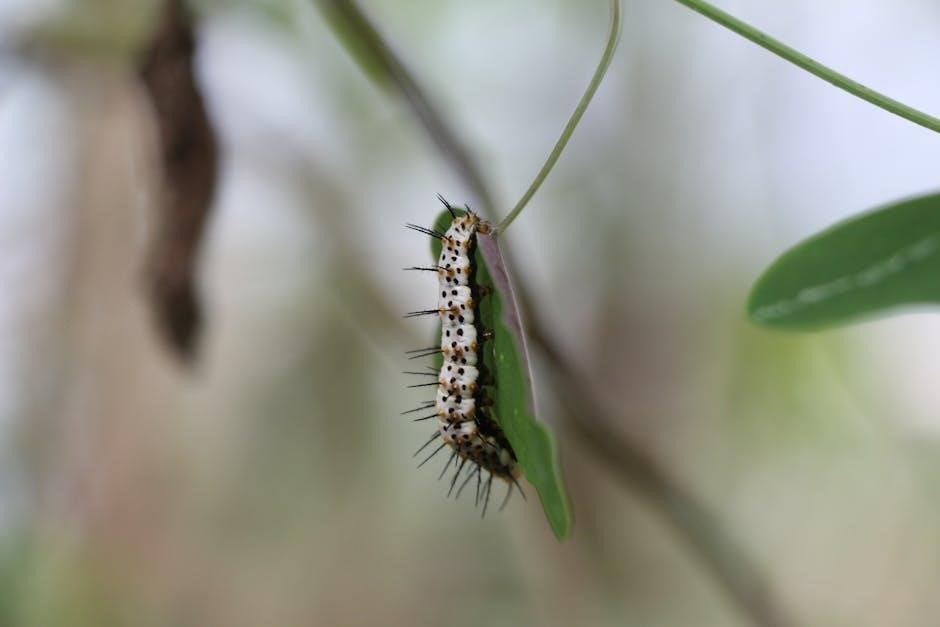
The mixed solution of Safer Caterpillar Killer has a considerably shorter shelf life than the concentrate; Once diluted‚ the biological efficacy of Bacillus thuringiensis (Bt) quickly diminishes due to environmental exposure. Strict adherence to post-mixing guidelines is crucial for pest control.
Instructions and resources advise prompt use of diluted solution. Apply the entire spray mixture within 24 hours of preparation. Some labels even restrict standing time in the tank to no more than 18 hours. This rapid degradation occurs because active Bt spores are vulnerable once hydrated and exposed to sunlight and air.
For maximum potency against caterpillars‚ gardeners should only mix the exact volume needed for immediate application. Preparing small batches prevents waste and ensures fresh‚ potent treatment. Discard any unused solution beyond the specified timeframe. Following these storage limitations ensures caterpillars ingest the most powerful‚ active bacterium‚ achieving effective control and promoting healthy plants;