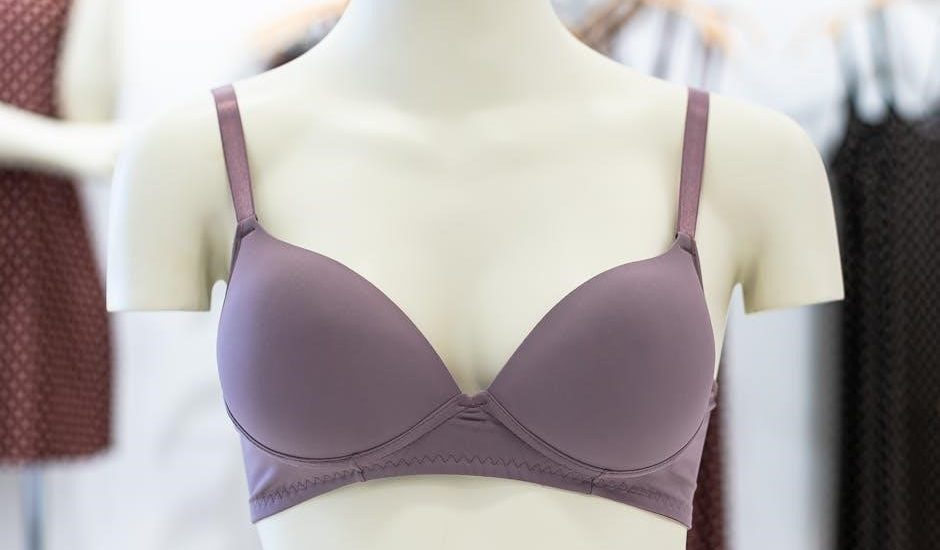
Finding the correct bra size is surprisingly complex, involving both numbers and letters, and varying methods depending on the bra style.
Ill-fitting bras can ruin outfits and cause discomfort, while a properly fitted bra offers support and enhances your silhouette.
Many discover they’ve been wearing the wrong size, impacting daily comfort and overall well-being, making accurate measurement crucial.
Why Accurate Bra Measurement Matters
The significance of accurate bra measurement extends far beyond mere comfort; it directly impacts posture, health, and even how clothing fits. Many underestimate the profound effect a well-fitted bra can have on daily life, often attributing discomfort to the bra itself rather than its incorrect size.
Wearing the wrong size can lead to back pain, shoulder grooves, and skin irritation, while a properly fitted bra provides essential support, alleviating these issues. It’s about more than aesthetics; it’s about investing in your physical well-being.
Furthermore, understanding your true bra size empowers you to shop confidently, avoiding frustration and ensuring a flattering fit with every outfit. Don’t let an ill-fitting bra ruin your day!
The Impact of Incorrect Bra Size
An ill-fitting bra can manifest in numerous uncomfortable and even detrimental ways, impacting both physical health and daily confidence. From minor annoyances like digging straps and gaping cups to more serious issues like back pain and poor posture, the consequences are significant.
Wearing a bra that’s too small can restrict circulation and cause skin irritation, while a bra that’s too large offers insufficient support, leading to strain and discomfort. These issues can ruin an otherwise flawless outfit, or worse, an entire day.
Ignoring proper fit can exacerbate existing back problems and contribute to long-term postural issues. Prioritizing accurate measurement is an investment in your overall well-being and comfort.
Understanding Bra Sizing Components
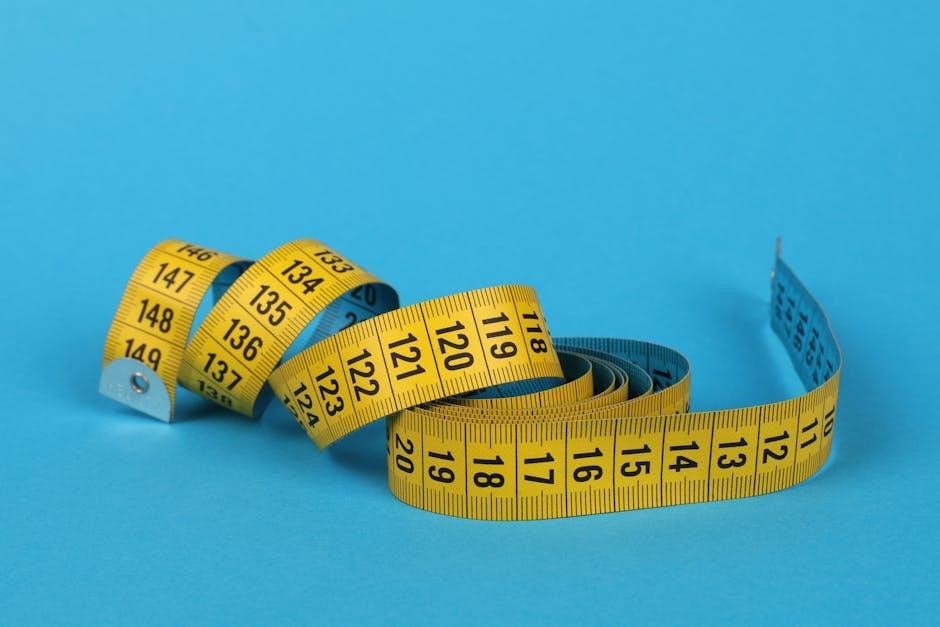
Bra sizing relies on two key measurements: band size, representing the underbust circumference, and cup size, indicating the difference between bust and underbust measurements.
Band Size: How to Measure
Accurately determining your band size is the foundation of a comfortable and supportive bra fit. Stand naturally and measure snugly around your torso directly under your breasts, ensuring the measuring tape is level all the way around.
Exhale normally while taking the measurement, as this impacts your ribcage size. If your measurement falls between sizes, it’s generally recommended to round up to the nearest whole number.
This ensures the band provides adequate support without being overly restrictive. Remember, the band provides the majority of the bra’s support, so a snug, but comfortable, fit is essential. A too-loose band will cause the straps to dig in, while a too-tight band will be uncomfortable and may cause back pain.
Cup Size: Determining the Difference
To determine your cup size, measure loosely around the fullest part of your bust, ensuring the tape measure is level and doesn’t dig in. Then, subtract your underbust measurement (band size) from your bust measurement.
This difference corresponds to your cup size: approximately one inch equals an A cup, two inches a B cup, three inches a C cup, and so on.
It’s important to note that cup sizes aren’t standardized across brands, so this is a starting point. Different bra styles also influence cup sizing, with plunge and balconette bras often requiring a different cup size than full-coverage bras.
Sister Sizes: Expanding Your Options
If your ideal bra size isn’t readily available, understanding sister sizes can significantly broaden your choices. A sister size is a bra with a different band and cup combination that yields roughly the same fit.
To find your sister sizes, either increase the band size and decrease the cup size (e.g., from 34C to 36B), or decrease the band size and increase the cup size (e.g., from 34C to 32D).
This is helpful when a specific size is out of stock or if you find a bra fits well in the band but the cups are slightly off; adjusting to a sister size might resolve the issue.
Step-by-Step Bra Measurement Guide
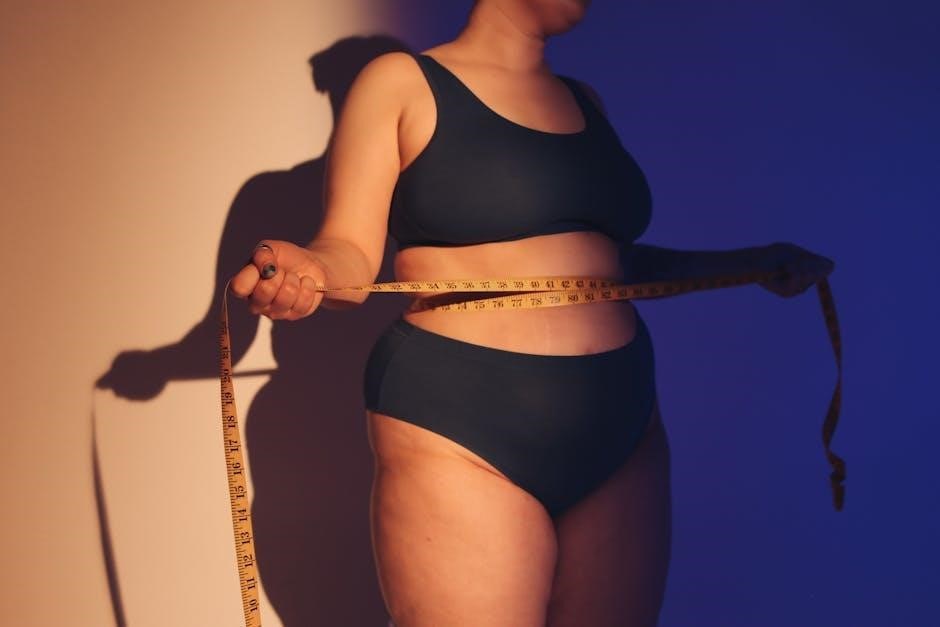
Accurate bra measurement requires specific tools and a careful, step-by-step approach to determine both your underbust and bust measurements for the best fit.
Tools You’ll Need for Accurate Measurement
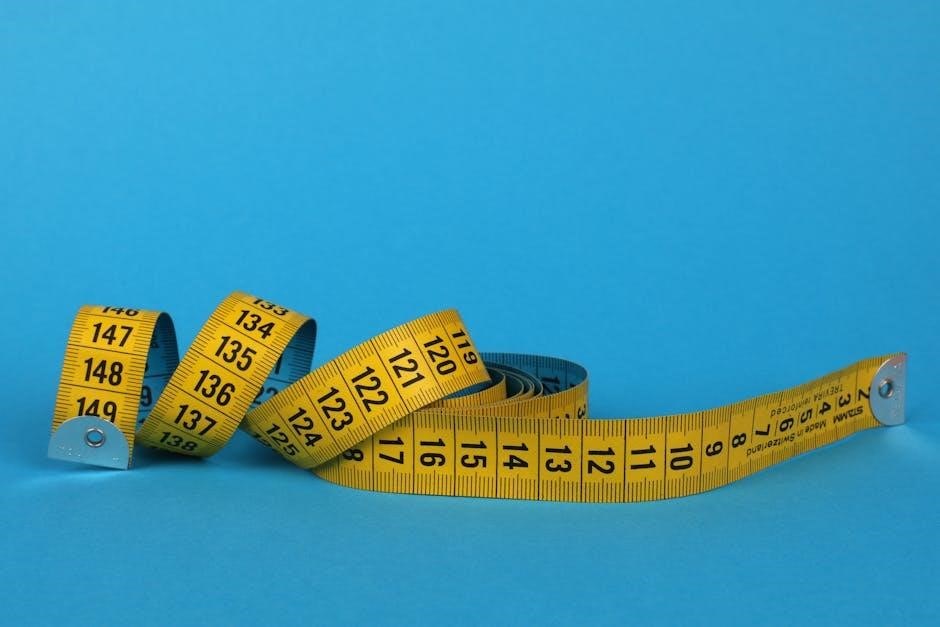
Embarking on a precise bra measurement journey doesn’t demand a vast array of specialized equipment, but a few key tools will significantly enhance accuracy and reliability. A flexible measuring tape is absolutely essential; avoid those with stretch, as they can distort results. It’s best to use a soft, cloth tape measure.
Wearing an unpadded bra – or no bra at all – is crucial for obtaining true measurements. A full-length mirror is also highly recommended, allowing you to observe your posture and ensure the tape is level during the process. Finally, having a friend assist can be incredibly helpful, especially when measuring your back, ensuring a snug but comfortable fit of the tape.
Measuring Underbust (Band Size) ⸺ Detailed Instructions
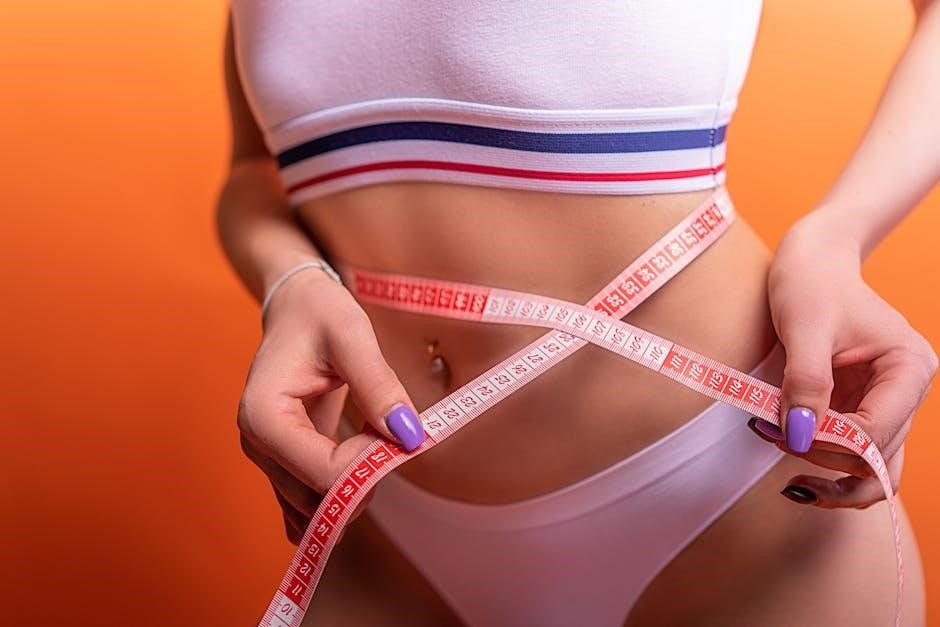
To accurately determine your band size, stand naturally and breathe normally. Position the measuring tape directly under your breasts, ensuring it’s snug but not constricting. The tape should run horizontally around your ribcage, level all the way around.
Exhale fully and record the measurement in inches. If the number is an odd number, add one inch to get your band size. For example, a 31-inch measurement becomes a band size of 32. This measurement forms the foundation of your bra size, providing essential support and comfort. Ensure the tape remains parallel to the floor throughout the process.
Measuring Bust (Bust Size) ⏤ Detailed Instructions
For an accurate bust measurement, wear a non-padded bra that closely resembles your usual style. Stand naturally and breathe normally, then wrap the measuring tape around the fullest part of your bust. Ensure the tape is level and doesn’t dig into your skin or ride up your back.
Keep the tape comfortably snug, but not tight. Exhale normally and record the measurement in inches. This measurement, combined with your underbust measurement, will help determine your cup size. Repeat the measurement to confirm accuracy, as slight variations can occur.
Calculating Your Initial Bra Size
To calculate your initial bra size, subtract your underbust measurement from your bust measurement. The difference in inches corresponds to your cup size: 1 inch equals an A cup, 2 inches a B cup, 3 inches a C cup, and so on.
Combine this cup size with your underbust measurement (band size) to determine your starting bra size. For example, if your underbust is 32 inches and the difference is 3 inches, your initial size is 32C. Remember this is a starting point; adjustments may be needed based on bra style and fit.
Bra Size Variations & Considerations
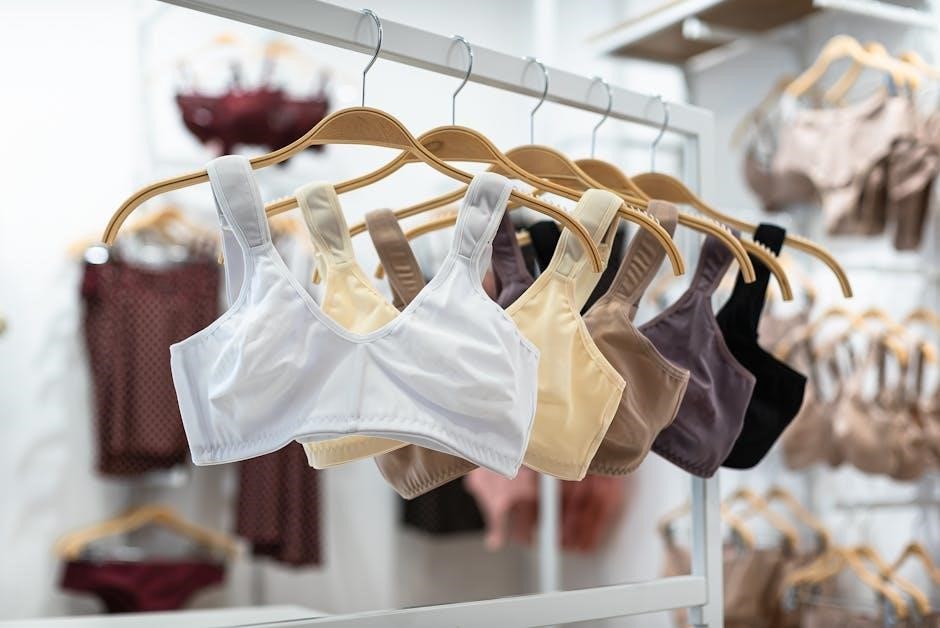
Bra sizing isn’t universal; different styles—balconette, plunge—and specific needs like sports or maternity bras require unique approaches to achieve optimal fit and support.
Different Bra Styles & Sizing (e.g., Balconette, Plunge)
Bra designers employ diverse sizing methods tailored to specific bra types, meaning your size isn’t static. A balconette bra, designed to lift and create cleavage, often requires a slightly different fit than a full-coverage style. Plunge bras, with their lower neckline, may necessitate adjustments to ensure secure support.
Understanding these nuances is vital; a size that feels perfect in a t-shirt bra might not translate well to a sports bra or a delicate lace bralette. Always consider the bra’s construction and intended purpose when determining the best fit. Don’t assume consistency across styles – re-measuring or seeking professional guidance is often beneficial when switching between significantly different bra designs.
Sports Bra Sizing: A Unique Approach
Sizing a sports bra differs significantly from everyday bras, relying on more than just a regular band and bust measurement. Accurate measurement of both is crucial, but consideration of your activity level is paramount. High-impact activities demand a firmer, more supportive fit than low-impact workouts.
Many sports bra brands utilize a combination of band size and bust size, while others employ a simple sizing system (S, M, L). Unlike traditional bras, sports bra sizing often prioritizes compression and encapsulation for optimal support during movement. Don’t simply guess based on your usual bra size; a proper fit prevents discomfort and maximizes performance.
Maternity Bra Sizing: Accommodating Changes
Pregnancy and breastfeeding cause significant breast size fluctuations, necessitating a different approach to bra sizing. Expect your ribcage to expand, impacting your band size, and your breasts to increase in volume, altering your cup size. It’s wise to be professionally measured during both pregnancy and postpartum.
Maternity bras often feature adjustable straps and band extensions to accommodate these changes. Nursing bras incorporate drop-down cups for easy feeding access. Don’t hesitate to re-measure frequently throughout pregnancy and while breastfeeding, as sizes can shift rapidly. Comfort is key, and a well-fitting maternity bra provides essential support.
How Bra Size Changes Over Time
Bra size isn’t static; it fluctuates due to weight changes, hormonal shifts, and even aging. Weight gain or loss directly impacts both band and cup sizes. Hormonal fluctuations, particularly around menstruation or menopause, can cause breast swelling or shrinkage. As we age, breast tissue loses elasticity, potentially leading to a change in shape and size.
Regular re-measurements – ideally annually, or whenever you notice a change in fit – are crucial. A bra that once fit perfectly may become uncomfortable or ill-supporting. Ignoring these changes can lead to back pain and poor posture. Prioritize comfort and proper support throughout life’s transitions.

Troubleshooting Common Bra Fitting Issues
Common problems like gapping cups, spillage, or digging straps signal an incorrect fit, impacting comfort and support. Adjustments or a new size may be needed.
Gapping Cups: What it Means & How to Fix It
Gapping cups indicate the bra isn’t fully encompassing your breast tissue, often stemming from a cup size that’s too large or a band that’s too loose. This can create an unflattering silhouette and reduce support.
To address this, first, ensure your band is snug and parallel to the floor – it provides 80% of the bra’s support. If the band feels secure, consider going down a cup size. Alternatively, if the gap appears primarily at the top of the cup, a different bra shape might be more suitable for your breast shape.
Plunge or balconette styles may not fully contain fuller breasts. Experimenting with different styles can resolve gapping, ensuring a smooth and supported look. A professional fitting can pinpoint the exact cause and recommend the best solution.
Spillage: Identifying & Addressing the Problem
Spillage, where breast tissue overflows the top or sides of the bra cup, signals the cup size is insufficient. It compromises support and can create an uncomfortable, unsightly appearance, potentially ruining outfits and causing discomfort throughout the day.
Identifying spillage is straightforward – look for bulging or compression of breast tissue beyond the cup’s edges. The immediate fix is to increase your cup size. However, ensure the band remains snug; simply upsizing the cup without adjusting the band can worsen the issue.
Consider a full-coverage bra style for better containment. A professional bra fitting is invaluable for accurately determining the correct cup size and band combination.
Digging Straps or Band: Adjusting for Comfort
Digging straps or a band that leaves red marks indicate a fit issue, causing discomfort and potentially impacting circulation. Often, this isn’t a band size problem, but rather a cup size issue – a too-small cup forces the band to work harder, creating digging.
First, ensure your straps aren’t overly tightened. They should provide support without cutting into your shoulders. If digging persists, try loosening the straps incrementally. Simultaneously, check your band; it should be snug but not constricting.
If the band continues to dig, consider a band extender or, conversely, down-sizing the cup and tightening the band. A professional fitting can pinpoint the root cause and offer tailored solutions.
Online Bra Size Calculators & Their Accuracy
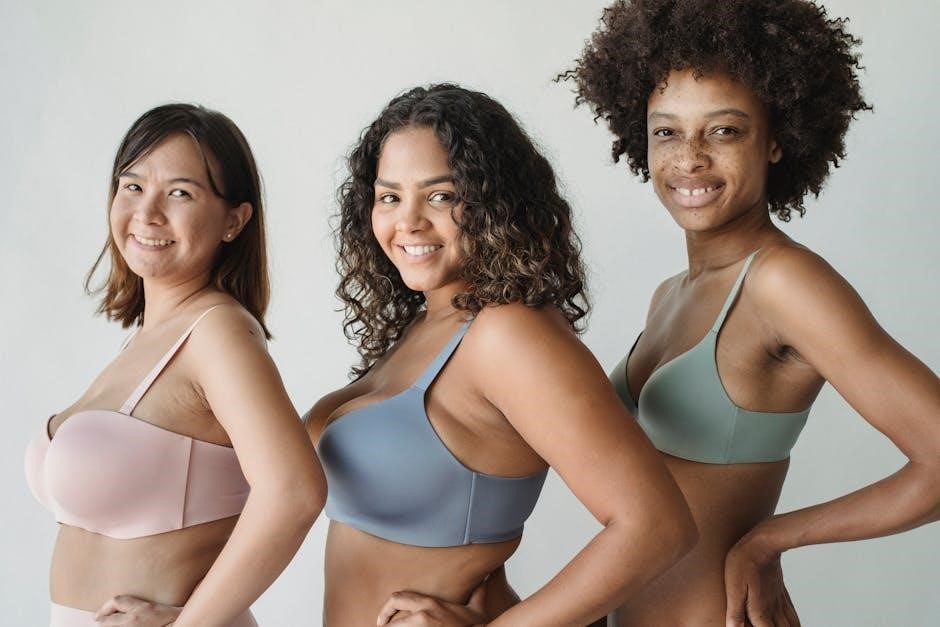
While convenient, online bra size calculators have limitations; they rely on self-reported measurements and generalized algorithms, often proving inaccurate for unique shapes.
Popular Bra Size Calculators: A Review
Numerous online bra size calculators aim to simplify the fitting process, but their effectiveness varies significantly. Many rely on a basic formula of measuring underbust and bust circumference, then applying a standardized calculation. However, these tools often fail to account for individual breast shapes, projection, and band tightness preferences.
Popular options include those offered by brands like Honeylove and various retailers. While providing a starting point, these calculators shouldn’t be considered definitive. TikTok’s viral breast size calculator gained traction, highlighting widespread sizing confusion, but still carries inherent inaccuracies. It’s crucial to remember these are estimations, and a professional fitting or careful self-assessment remains the most reliable approach.
Limitations of Online Calculators
Despite their convenience, online bra size calculators possess significant limitations. They struggle to replicate the nuanced assessment of a professional fitter, often overlooking crucial factors like breast shape, tissue density, and individual band preferences. These tools typically assume a standard breast projection, which isn’t universally accurate.
Furthermore, variations in measuring technique – how tightly the tape measure is held, or the position of the breasts during measurement – can drastically alter results. Relying solely on a calculator can lead to an incorrect size, perpetuating discomfort and poor support. They are best used as a preliminary guide, not a final answer, and should be supplemented with self-assessment or a professional fitting.
Professional Bra Fittings: When to Seek Help
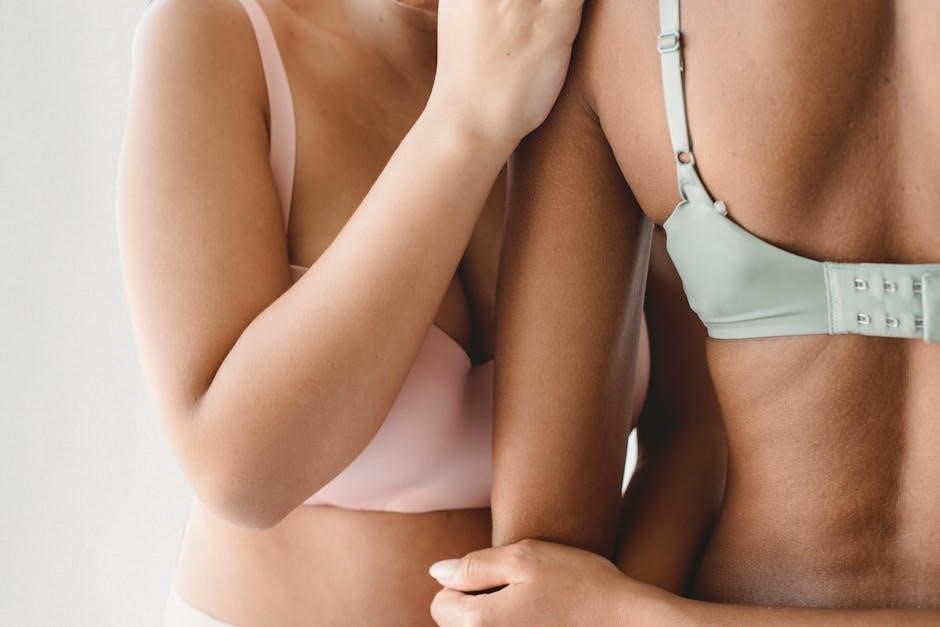
Expert fittings offer personalized guidance, addressing unique body shapes and concerns that online tools miss, ensuring optimal comfort and support for every woman.
Benefits of a Professional Fitting
A professional bra fitting goes beyond simply measuring band and bust size; it’s a comprehensive assessment of how a bra interacts with your unique body. Trained fitters can identify subtle issues – like uneven shoulders or breast shapes – that impact comfort and support, things easily missed during self-measurement.
They’ll expertly guide you through various bra styles, demonstrating how different shapes enhance your silhouette and address specific needs. Many high street stores offer free fittings, though at-home options are increasing in popularity. A fitter can also help you understand sister sizes, expanding your options and ensuring a perfect fit even when your preferred size isn’t available. Ultimately, a professional fitting empowers you with knowledge, leading to increased confidence and all-day comfort.
What to Expect During a Bra Fitting
During a professional bra fitting, expect a private consultation with a trained fitter. You’ll likely be asked about your current bra size, any fit issues you experience, and your preferred bra styles. The fitter will then measure your underbust (band size) and bust circumference, ensuring the tape measure is level and snug but not constricting.
You’ll try on several bras in different sizes and styles, allowing the fitter to assess the fit – checking for gapping cups, spillage, and digging straps. Don’t hesitate to communicate any discomfort or preferences! The fitter will educate you on proper bra care and when it’s time to replace your bras, ensuring you leave feeling confident and well-supported.
Beyond the Basics: Bra Shape & Body Type
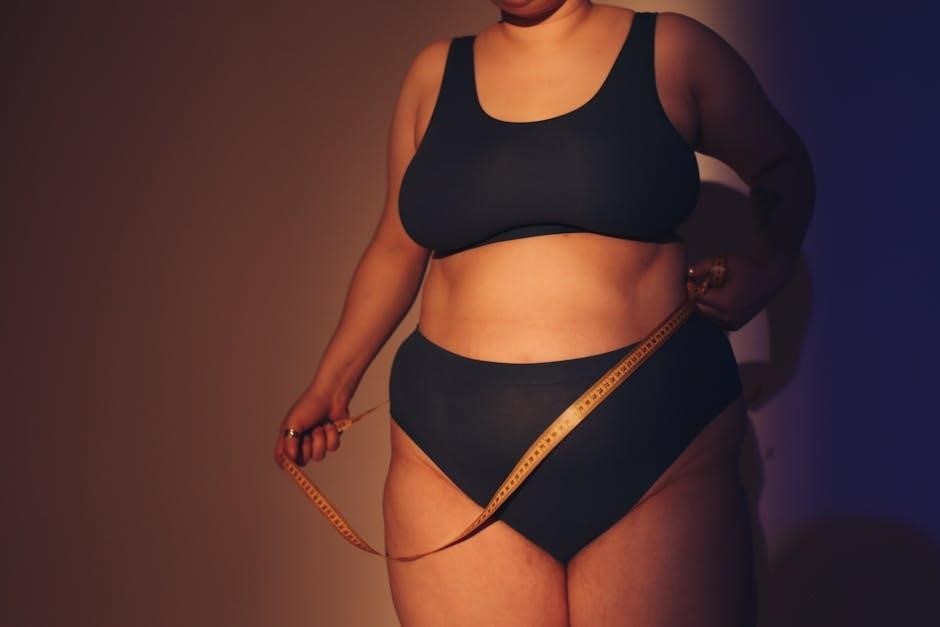
Selecting a bra shape that complements your breast shape and body type is vital for optimal support and a flattering silhouette, going beyond size.
Finding the Right Bra Shape for Your Breast Shape
Understanding your breast shape is key to finding a bra that provides both comfort and a flattering fit. Different shapes – rounded, teardrop, shallow, or asymmetrical – benefit from specific bra styles.
For fuller breasts, a full-coverage bra offers excellent support and containment. Teardrop shapes often look best in balconette bras, which lift and enhance natural shape.
Those with shallower breasts might prefer padded bras to create volume, while side-support bras can help with projection. Asymmetrical breasts may require a bra with removable padding or a visit to a professional fitter to address the imbalance. Ultimately, experimenting with different shapes will reveal what works best for your unique anatomy.
Considering Your Body Type for Optimal Support
Beyond breast shape, your overall body type influences the best bra choices for optimal support and comfort. Broader shoulders may benefit from wider straps to distribute weight evenly, preventing digging or slippage.
A shorter torso might require a bra with a lower band to avoid riding up, while a longer torso can accommodate higher bands. Those with a larger frame generally need bras with stronger underwire and wider bands for adequate support.
Considering these factors alongside your breast shape ensures a harmonious fit that enhances your silhouette and provides all-day comfort, moving beyond just size numbers.
Maintaining Your Bra’s Fit & Longevity
Proper care, including gentle washing and avoiding harsh detergents, extends a bra’s life and maintains its shape and support capabilities over time.
Proper Bra Washing & Care
Extending your bra’s lifespan requires diligent care beyond simply tossing it in the wash. Hand washing is ideal, using a mild detergent specifically designed for delicates, but machine washing is acceptable with precautions.
Always place your bras in a lingerie bag to protect them from snagging and twisting during the cycle. Avoid hot water and harsh detergents, as these can break down the elastic and damage the fabric.
Never put your bras in the dryer! The heat will destroy the shape and elasticity. Instead, lay them flat to air dry, away from direct sunlight. Properly storing your bras also matters – avoid stacking them, as this can distort the cups.
Instead, nest them or hang them to maintain their shape and support.
Knowing When to Replace Your Bra
Even with the best care, bras don’t last forever. Over time, the elastic degrades, losing its supportive power, and the shape becomes compromised. A telltale sign is a stretched-out band that doesn’t provide adequate support, forcing straps to dig in.
If you find yourself constantly adjusting the straps or switching to the tightest hook, it’s time for a replacement. Another indicator is if the cups lose their shape or become misshapen, failing to fully contain your breasts.
Generally, bras should be replaced every six to nine months with frequent wear, or after a significant weight change. Don’t wait until your bra is completely worn out – proactively replacing it ensures continued comfort and support.