

Discover 20 exercises, suitable for all levels, designed to build powerful quads and a balanced lower body, enhancing performance in various physical activities.
Why Strong Quads Matter
Strong quadriceps are fundamental for overall athletic performance and daily functionality. As some of the body’s largest and most powerful muscles, well-developed quads directly impact movements like squatting, lunging, running, and jumping, improving power and efficiency.
Beyond athletics, robust quads contribute to joint stability, particularly in the knees, reducing the risk of injury. Strengthening these muscles supports proper biomechanics, alleviating stress on ligaments and tendons. Consistent quad training enhances lower body strength, leading to improved balance and a greater capacity for physical exertion in everyday life.
Ultimately, prioritizing quad strength unlocks potential for increased power, reduced injury risk, and enhanced overall physical well-being.
Understanding Quadriceps Anatomy
The quadriceps femoris, located on the front of the thigh, is comprised of four distinct muscles: the rectus femoris, vastus lateralis, vastus medialis, and vastus intermedius. Each muscle contributes uniquely to knee extension and hip flexion (rectus femoris only).
The vastus muscles – lateralis, medialis, and intermedius – work synergistically to straighten the leg at the knee joint. The vastus medialis oblique (VMO), a portion of the vastus medialis, plays a crucial role in patellar tracking and knee stability.
Understanding this anatomy is vital for targeted exercise selection. Effective quad training should address all four muscles to ensure balanced development and optimal function, maximizing strength and minimizing injury potential.
Warm-up Exercises for Quadriceps
Prepare your muscles with dynamic stretches and light cardio to increase blood flow, enhance flexibility, and optimize performance before quad-focused exercises.
Dynamic Stretching for Quads
Begin with leg swings – forward, backward, and side-to-side – to increase range of motion and prepare the quadriceps for activity. Incorporate walking lunges with a twist, actively engaging the quads and improving hip mobility. High knees and butt kicks further elevate heart rate and dynamically stretch the muscles.
Add quad pulls, gently bringing your heel towards your glutes while maintaining balance. These movements aren’t held; instead, focus on controlled, fluid motions. Dynamic stretching prioritizes movement, unlike static stretches, which are best reserved for cool-downs.
Remember to perform each stretch for approximately 10-15 repetitions per leg, ensuring a full, yet comfortable, range of motion. This prepares the quads for the demands of the workout ahead.
Light Cardio Activation
Start with 5-10 minutes of low-impact cardio to increase blood flow to the quadriceps and raise your core body temperature. Consider activities like brisk walking, light jogging, or cycling at a comfortable pace. This prepares the muscles for more intense work, reducing the risk of injury.
Focus on movements that subtly engage the quads, such as marching in place with high knees or performing gentle step-ups. Avoid pushing yourself too hard during this phase; the goal is activation, not exhaustion;
This initial cardio phase primes the neuromuscular system, enhancing muscle responsiveness and improving overall exercise performance. It’s a crucial step before diving into more demanding quadriceps strengthening exercises.
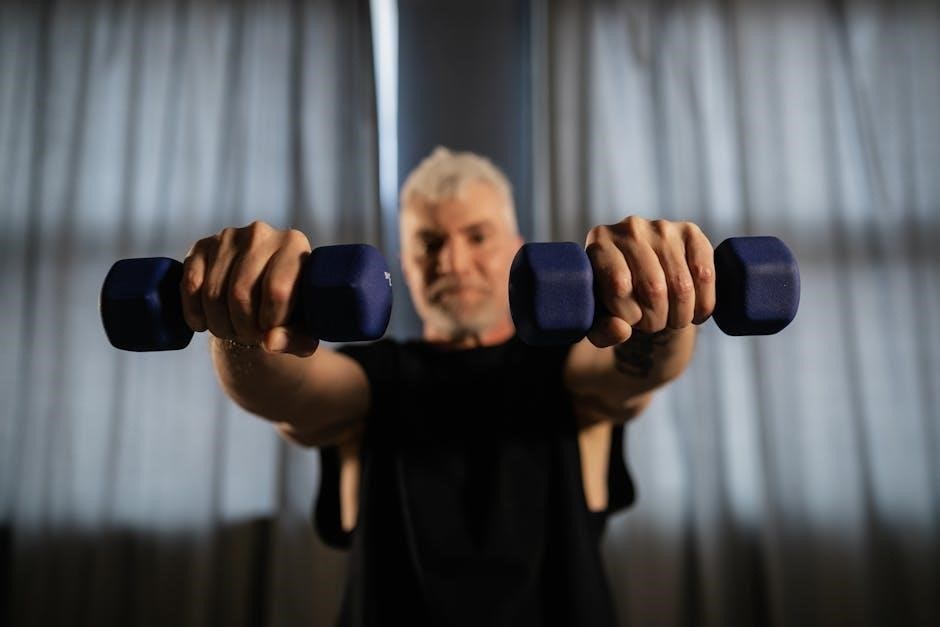
Bodyweight Quadriceps Exercises
Utilize your own body weight for foundational strength training, including squats, lunges, and wall sits, building a solid base for more advanced movements.
Squats: The Foundation
Squats are undeniably the cornerstone of any effective quadriceps strengthening program. They engage not only the quads but also the glutes and hamstrings, promoting overall lower body development. Proper form is crucial: maintain a straight back, chest up, and descend as if sitting into a chair, keeping your weight in your heels.
Beginners can start with bodyweight squats, focusing on mastering the technique before adding resistance. Variations like goblet squats (holding a weight in front) or jump squats can increase the challenge. Squats improve performance in daily activities and athletic endeavors, building both strength and power. Consistent practice with correct form yields significant results, making it a truly foundational exercise.
Lunges: Variations and Technique
Lunges are a fantastic unilateral exercise, meaning they work one leg at a time, addressing muscle imbalances and improving stability. Maintaining proper technique is key: step forward, lowering your body until both knees are bent at 90-degree angles. Your front knee should be directly over your ankle, and your back knee should hover just above the ground.
Numerous variations exist, including forward lunges, reverse lunges, walking lunges, and lateral lunges, each targeting the quads from slightly different angles. Adding dumbbells or a barbell increases the intensity. Lunges build strength, endurance, and functional fitness, enhancing athletic performance and everyday movements.
Wall Sits: Isometric Strength
Wall sits are a simple yet highly effective isometric exercise, building quadriceps strength and endurance without requiring any equipment. To perform a wall sit, lean your back against a wall and slide down until your thighs are parallel to the ground, mimicking a seated position.
Hold this position for as long as possible, maintaining a straight back and ensuring your knees are directly above your ankles. This exercise challenges your quads to sustain a contraction, improving muscular endurance. Wall sits are excellent for rehabilitation, beginners, or as a finisher to a leg workout, promoting stability and control.
Step-Ups: Building Power
Step-ups are a dynamic exercise that effectively builds quadriceps strength, power, and unilateral stability – meaning working one leg at a time. Find a sturdy box or bench of appropriate height. Step onto the surface with one foot, driving through your heel to lift your body up, extending your leg fully.
Slowly lower yourself back down, controlling the movement. Alternate legs with each repetition. Step-ups mimic real-life movements like climbing stairs and are fantastic for improving functional strength. Varying the box height increases the challenge, enhancing power development in the quadriceps and glutes.
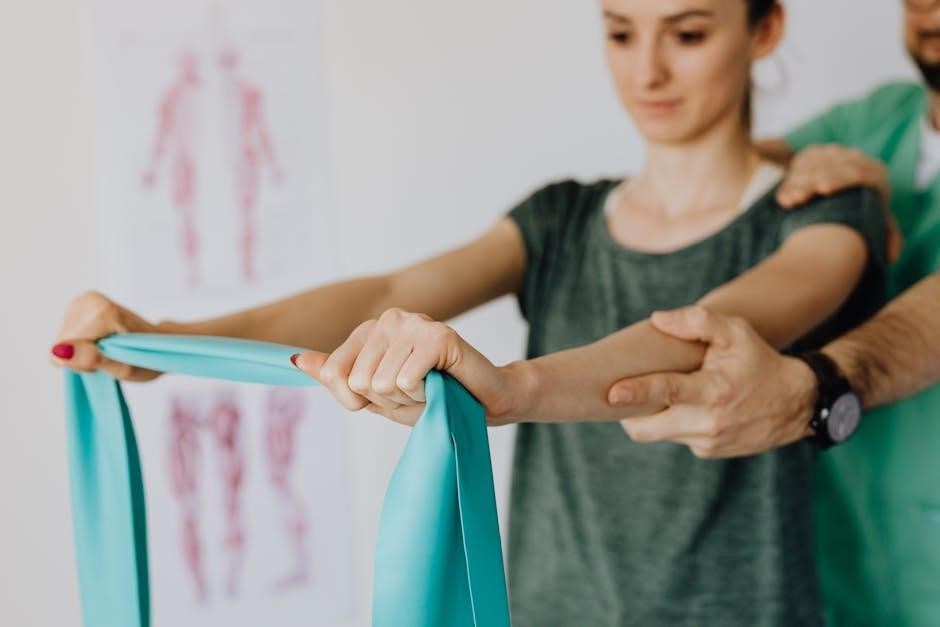
Resistance Band Quadriceps Exercises
Utilize resistance bands to amplify quad engagement, offering progressive resistance for squats, walks, and extensions, targeting muscle activation and hypertrophy effectively.
Band Squats: Increased Resistance
Band squats elevate the traditional squat by adding consistent tension throughout the movement, maximizing quadriceps activation. Position a resistance band around your thighs, just above the knees. Stand with feet shoulder-width apart, maintaining a neutral spine and engaged core. As you descend into a squat, the band resists your outward knee movement, forcing your quads to work harder to control the motion.
This increased resistance promotes greater muscle fiber recruitment, leading to enhanced strength and hypertrophy. Focus on maintaining proper form – chest up, back straight, and knees tracking in line with your toes. Experiment with different band resistances to progressively challenge your muscles. Band squats are excellent for beginners and advanced lifters alike, offering a scalable and effective quad-building exercise.
Band Walks: Lateral Quad Activation
Band walks are a fantastic exercise for targeting not only the quads but also the glutes and hip abductors, contributing to overall lower body stability. Place a resistance band around your ankles or just above your knees. Maintain a slight bend in your knees and a neutral spine, keeping your core engaged.
Take small, controlled steps laterally (sideways), maintaining tension on the band throughout the movement. Focus on pushing your hips back slightly and keeping your feet hip-width apart. This exercise effectively activates the vastus lateralis, a key muscle in the quadriceps group, improving lateral stability and preventing knee valgus (knees caving inward). Perform walks in both directions for balanced development.
Band Extensions: Targeted Isolation
Band extensions provide focused isolation of the quadriceps muscles, particularly beneficial for rehabilitation or addressing specific weaknesses. Secure a resistance band to a stable anchor point at a low position. Attach the other end to your ankle. Stand facing away from the anchor, maintaining a slight bend in your standing leg.
Slowly extend your leg straight out against the band’s resistance, focusing on contracting your quadriceps. Control the movement throughout, avoiding any jerky motions. This exercise effectively targets the quadriceps without significant involvement from other muscle groups. It’s excellent for building strength and definition. Adjust band resistance to match your fitness level and ensure proper form to prevent injury.
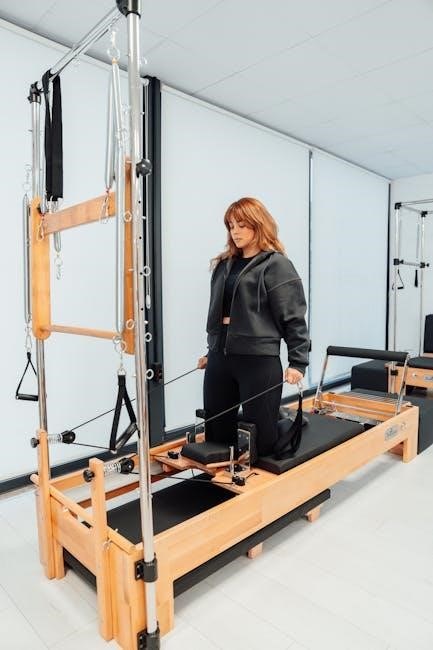
Weight Training Quadriceps Exercises
Explore barbell squats, leg presses, leg extensions, and Bulgarian split squats – powerful exercises utilizing external weights to maximize quad strength and hypertrophy.
Barbell Squats: The King of Quad Exercises
Barbell squats are widely considered the most effective exercise for overall lower body strength and, crucially, quadriceps development. This compound movement engages numerous muscle groups simultaneously, promoting significant strength gains and muscle hypertrophy. Proper form is paramount; maintain a straight back, controlled descent, and drive through your heels.
Begin with a weight you can comfortably manage for 3 sets of 8-12 repetitions. Gradually increase the weight as your strength improves. Variations like high-bar and low-bar squats can subtly shift the emphasis, but all contribute to robust quad development. Remember to prioritize technique over lifting heavy weight to prevent injuries and maximize results. Squats truly are foundational for building powerful legs.
Leg Press: Controlled Loading
The leg press offers a fantastic alternative to barbell squats, particularly for those new to heavy lifting or recovering from injury. It allows for controlled loading, minimizing stress on the lower back while still effectively targeting the quadriceps. Adjust the foot placement to emphasize different areas – higher placement focuses more on the glutes and hamstrings, while lower placement prioritizes the quads.
Start with a weight that allows for 3 sets of 10-15 repetitions, maintaining a full range of motion. Avoid locking your knees at the top of the movement. The leg press is excellent for building strength and size, providing a safe and effective way to challenge your lower body.
Leg Extensions: Isolation Focus
Leg extensions are a targeted isolation exercise specifically designed to work the quadriceps muscles. This machine-based exercise allows you to focus solely on quad development, making it ideal for addressing muscle imbalances or enhancing definition. Ensure proper form by adjusting the machine to align with your knee joint.
Begin with a moderate weight and perform 3 sets of 12-15 repetitions, controlling the movement throughout the entire range of motion. Avoid swinging or using momentum. While effective, leg extensions should complement compound exercises, not replace them, for comprehensive leg strength.
Bulgarian Split Squats: Unilateral Strength
Bulgarian split squats are a challenging unilateral exercise, meaning they work one leg at a time, significantly improving balance and addressing strength discrepancies. This exercise intensely targets the quads, glutes, and hamstrings, while also enhancing core stability. To perform, place the top of one foot on a bench behind you.
Lower your body until your front thigh is parallel to the ground, keeping your front knee aligned with your ankle. Perform 3 sets of 10-12 repetitions per leg. Adding weight (dumbbells or a barbell) increases the intensity. This exercise is excellent for building functional strength.
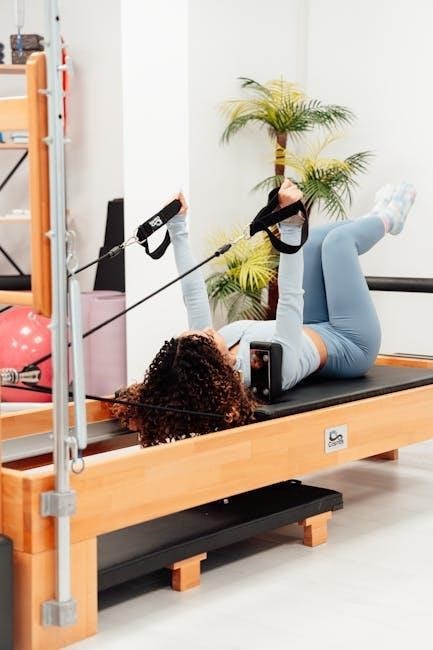
Advanced Quadriceps Exercises
Elevate your training with front squats and pistol squats – demanding movements for experienced lifters seeking peak quad development and overall lower body power.
Front Squats: Quad Emphasis
Front squats are a fantastic advanced exercise, placing significant emphasis on the quadriceps due to the altered center of gravity. Holding the barbell across the front of your shoulders—either in a clean grip or with arms crossed—forces your quads to work harder to maintain an upright torso throughout the movement.
This variation minimizes stress on the lower back compared to back squats, making it a valuable option for individuals with back issues or those seeking to prioritize quad development. Proper technique is crucial; maintain a tight core, keep your elbows high, and descend with control. Front squats build substantial quad strength and improve overall squatting mechanics.
Pistol Squats: Advanced Bodyweight Challenge
Pistol squats represent a pinnacle of bodyweight strength and balance, demanding exceptional quad strength, core stability, and ankle mobility. Executed by squatting down on a single leg while extending the other leg straight out in front, this exercise is incredibly challenging.
Mastering pistol squats requires significant practice and progression; start with assisted variations, like holding onto a support or using a box for assistance. Focus on maintaining a straight back, keeping your weight over your heel, and controlling the descent and ascent. Successfully performing pistol squats demonstrates impressive lower body power and control, truly testing your limits.
Cool-down and Stretching
Prioritize recovery with static quad stretches and foam rolling to reduce muscle soreness, improve flexibility, and enhance overall lower body performance post-workout.
Static Stretching for Quads
Following your quadriceps workout, incorporating static stretches is crucial for improving flexibility and reducing muscle soreness. Hold each stretch for 30 seconds, focusing on a gentle, controlled elongation of the quadriceps muscle. A common and effective stretch involves standing and pulling one heel towards your glutes, keeping your knees aligned and your back straight.
You should feel a stretch in the front of your thigh. Another variation includes lying prone and performing the same heel-to-glute pull. Remember to breathe deeply throughout each stretch, avoiding any bouncing or jerky movements. Consistent static stretching contributes to a greater range of motion and helps prevent future injuries, complementing your strengthening efforts.
Foam Rolling for Recovery
Enhance your recovery process and alleviate muscle tightness with foam rolling. Targeting the quadriceps, slowly roll from just above the knee to the hip, spending extra time on any particularly tender spots. This self-myofascial release technique helps break up adhesions and improve blood flow, reducing soreness and promoting faster muscle recovery.
Maintain a controlled pace and use your body weight to adjust the pressure. Avoid rolling directly over the knee joint. Foam rolling should be slightly uncomfortable, but not intensely painful. Incorporate it into your routine post-workout or on rest days to optimize muscle health and prepare your quads for subsequent strengthening sessions, maximizing your results.